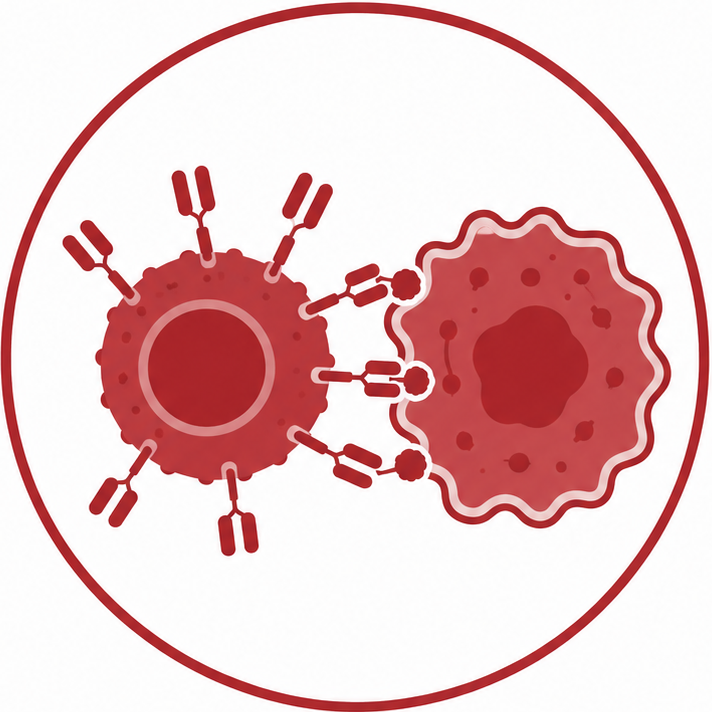
CAR T-Cell Therapy
Turning Our Own Immune Cells into Powerful Cancer Fighters
1. What is CAR T-Cell Therapy?
CAR T-cell therapy is a type of immunotherapy that uses a patient's own T cells (a kind of white blood cell) and genetically reprograms them in the laboratory to recognize and attack cancer cells.
It is especially useful for blood cancers like B-cell acute lymphoblastic leukaemia (B-ALL) that have come back (relapsed) or do not respond to standard treatments. In most B-ALL cases, the cancer cells carry a protein called CD19 on their surface — CAR T cells are engineered to specifically detect CD19 and kill those cells.
💡 In simple terms: We take the patient's own immune cells, train them in the lab to find the cancer, and multiply them so they can go back and fight it effectively.
2. The CAR T-Cell Therapy Process: Step-by-Step
1
Leukapheresis
T cells are collected from the patient's blood through apheresis.
2
T Cell Activation
Cells are activated in the lab for genetic modification.
3
Genetic Engineering
A viral vector inserts the CAR gene that targets CD19.
4
Expansion
CAR T cells are rapidly multiplied to reach therapeutic numbers.
5
Quality Testing
Cells are tested for safety, identity, purity and potency.
6
Infusion
CAR T cells are infused back into the patient through a vein.
7
In-Body Action
CAR T cells find and destroy CD19+ cancer cells and keep multiplying.
Key Point: This entire process takes about 2–3 weeks from cell collection to infusion, depending on the center and technology.
🏆 Historic Milestone in Pakistan
At AFBMTC, Rawalpindi, the first indigenously prepared anti-CD19 CAR T-cell therapy was successfully given on 18 June 2026 to a 21-year-old patient with relapsed/refractory B-ALL (relapsed twice on previous treatments). The patient achieved MRD-negative complete remission by Day +14 and was discharged on 3 July 2026.
3. How Do CAR T Cells Work Inside the Body?
- CAR T cells circulate in the blood and tissues.
- They recognize CD19 on B-ALL cancer cells.
- They bind to the cancer cell like a key in a lock.
- They become activated and release powerful killing substances (perforin, granzymes, cytokines).
- The cancer cell is destroyed.
- CAR T cells can multiply and continue to provide long-term surveillance.
✔ Benefits of CAR T-Cell Therapy
- Targets cancer cells specifically
- Can induce deep and durable remissions
- One-time therapy with long-lasting effect
- Uses the body's natural immune system
4. Safety: Possible Side Effects and Their Management
CAR T-cell therapy is powerful and can cause side effects, but with close monitoring and early treatment, most can be managed effectively.
1. Cytokine Release Syndrome (CRS)
Caused by the release of cytokines from activated CAR T cells.
Symptoms: Fever, chills, low blood pressure, low oxygen, fatigue.
Management: Supportive care, IV fluids, oxygen, Tocilizumab, steroids (if needed).
2. Immune Effector Cell-Associated Neurotoxicity Syndrome (ICANS)
Can affect brain function.
Symptoms: Confusion, headache, seizures, trouble speaking.
Management: Close neurological monitoring, steroids, supportive care.
🩺 At AFBMTC, a dedicated multidisciplinary team closely monitors every patient to ensure early detection and prompt management of any side effects.
5. Why This Milestone Matters
🤝 Hope for Patients
Offers a potentially curative option for patients who have exhausted all other treatments.
🚩 National Achievement
The first indigenously prepared CAR T-cell therapy in Pakistan — a proud step toward self-reliance in advanced medical care.
📊 Future of Medicine
Opens the door to more cellular and immune-effector therapies for many cancers and diseases.
❤️ Team Effort
A success built on years of preparation by physicians, scientists, lab professionals, nurses and the entire AFBMTC team under the Army Medical Corps.
Patient Outcome
21-year-old male with relapsed/refractory B-ALL (relapsed twice)
⬇
Anti-CD19 CAR T-cell therapy given on 18 June 2026
⬇
MRD-negative complete remission by Day +14
⬇
Discharged on 3 July 2026
🌐 Key Facts About CAR T-Cell Therapy
Approved worldwide for selected blood cancers (ALL, NHL, CLL, MM)
FDA approved in 2017 for B-cell ALL (tisagenlecleucel, kymriah)
High remission rates in relapsed/refractory B-ALL (70–90% in studies)
Potential for long-term cure in a subset of patients
An evolving field with ongoing research and newer generations of CARs
This is the dawn of a new era for cellular and immune-effector therapies in Pakistan. Insha'Allah, we look forward to extending this life-saving therapy to many more patients.
PAKISTAN ZINDABAD !!